
Global physical activity remains low despite two decades of guideline updates, UTHealth Houston researchers find
The prevalence of physical activity among the global population has remained low for the last two decades despite a majority of countries making notable progress in developing policies that include physical activity, UTHealth Houston researchers found.
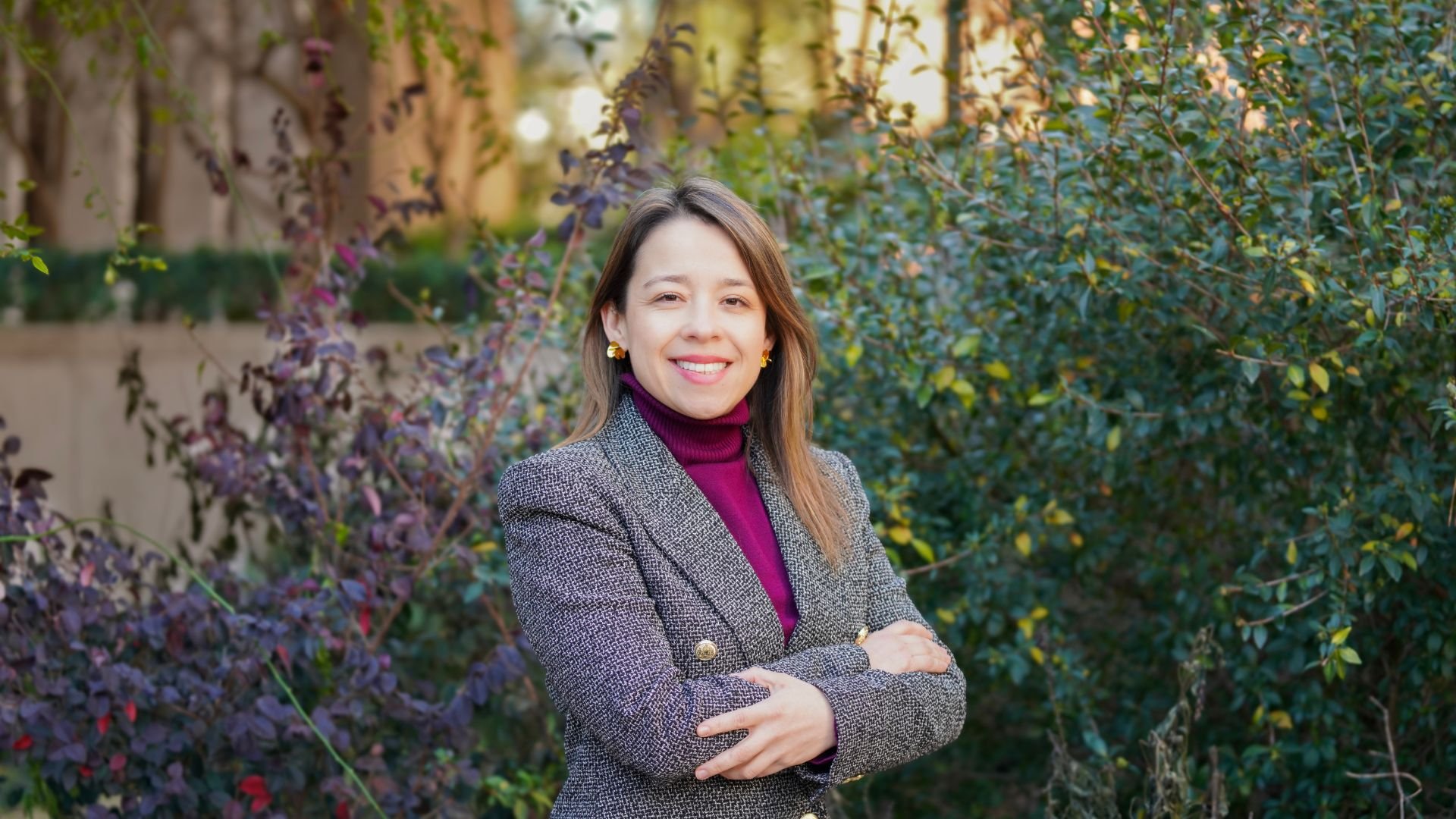
The study was published today in Nature Health and led by principal investigator Andrea Ramirez Varela, MD, PhD, MPH, assistant professor in the Department of Epidemiology at UTHealth Houston School of Public Health.
“Physical activity as a behavior that enhances health and has other benefits has really not increased since 2012,” said Ramirez Varela, who is also an assistant professor in the Department of Pediatrics at McGovern Medical School at UTHealth Houston. “But that can be mistakenly taken as if there was no action or policy action around it.”
According to Ramirez Varela’s research, 92% of countries have at least one policy document addressing physical activity. Of those countries, 35% have a policy specifically dedicated to physical activity.
While that’s a significant increase from the number of countries that had such policies in 2004, researchers found that 1 in 3 adults worldwide are still not meeting the World Health Organization physical activity guidelines. According to WHO, adults should get at least 150 minutes of moderate-intensity physical activity weekly.
Using a combination of information taken from interviews, peer-reviewed research, and policy documents from 218 countries between 2004 and 2025, Ramirez Varela and her team sought to propose solutions for how countries can translate physical activity guidelines into action.
“What we see in other modifiable risk factors for chronic diseases – like smoking, alcohol, nutrition – they have a lot of prioritization, and there is a lot of activity around putting them first. For physical activity, it has been different,” Ramirez Varela said. “We wanted to really understand why after all this apparent improvement in policy development, there was no change or the translation of this into the real world.”
Ramirez Varela’s team proposed that countries take a more proactive approach to defining and framing the issue of physical activity.
“There is no consensus if physical activity is an outcome or a means to achieve other outcomes,” Ramirez Varela said. “Do we want to increase physical activity levels to improve cardiovascular health and other outcomes, or do we want to just improve physical activity?”
Physical activity should also be framed as having both individual and population-level benefits, the team said.
“Physical activity should be embedded in the way we design our cities, helping create communities where people want to live and move more,” Ramirez Varela said. “It also belongs in education. Physical activity spans multiple sectors, yet the conversation has largely been focused on health.”
The research team also recommended that stakeholders build stronger leadership and partnership networks that promote physical activity.
“Almost thirty years ago, smoking was far less regulated. People were allowed to smoke on airplanes, indoors, and in most public spaces. Today, both tobacco industry and smoking behavior are subject to extensive regulations,” Ramirez Varela said. “We can build that same level of policy commitment for physical activity. The fact that it is not fully in place today simply means the work is ahead of us.”
The research was published in conjunction with two other population-level studies about physical activity, which Ramirez Varela co-authored.
Ramirez Varela’s work builds on more than two decades of research into physical activity that was first published in The Lancet in 2012. Subsequent studies into physical activity were also published in 2016 and 2021.
The late Harold W. Kohl III, PhD, professor of epidemiology at UTHealth Houston School of Public Health, also co-authored the paper.
Authors from The University of Sydney include Adrian Bauman, PhD; J. Jaime Miranda, MD; MSc, PhD; and Melody Ding, PhD, MPH.
Other authors include Catherine B. Woods, PhD, of the University of Limerick in Ireland; Yusra Ribhi Shawar, PhD, MPH; and Jeremy Shiffman, PhD, of Johns Hopkins University; Pedro C. Hallal, PhD, of the University of Illinois Urbana-Champaign; Deborah Salvo, PhD, of The University of Texas at Austin; Katja Siefken, PhD, of the Medical School Hamburg in Germany; Wanda Wendel-Vos, PhD, of the National Institute for Public Health and the Environment in the Netherlands; Juliana Mejia-Grueso, MSc, of the Global Observatory for Physical Activity; James F. Sallis, PhD, of the Australian Catholic University in Australia; Erica Hinckson, PhD, of the Auckland University of Technology in New Zealand; I-Min Lee, MBBS, MPH, ScD, of Harvard Medical School; Rodrigo Siqueira Reis, PhD, of Washington University in St. Louis, Missouri; Ulf Ekelund, PhD, of the Norwegian Public Health Institute; and Michael Pratt MD, MSPE, MPH, of the University of California San Diego.