
Collaborative Communication Training Equips Clinics with Strategies to Improve Hypertension and Heart Health
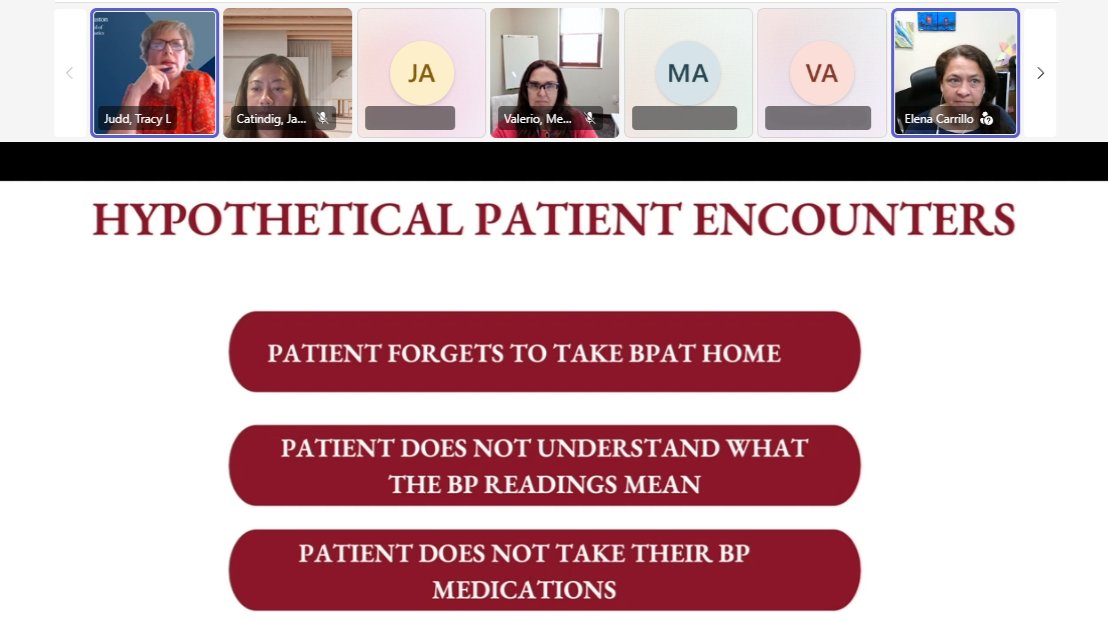
The Heart Disease and Stroke Prevention Program at the UTHealth Houston Center for Health Promotion and Prevention Research is providing training to clinic staff at primary care clinics in Texas to equip them with practical, clinic-ready communication tools that have been proven to improve health outcomes related to hypertension. This initiative is a collaboration with the American Heart Association (AHA) that uses the AHA/American Medical Association (AMA)’s Target:BPTM Improvement Program’s evidence-based Measure, Act, Partner (MAP) approach.
Hypertension can cause serious medical conditions like heart disease, kidney disease, and stroke. It is the primary or contributing cause of more than 500,000 deaths each year in the U.S. and a major burden on the medical system, costing billions of dollars a year. This is particularly an issue in Texas, where 32% of the population is living with hypertension.
Research shows that a collaborative care approach can improve hypertension outcomes. When patients are actively engaged in their care, they proactively seek advice from their clinicians and take a more active role in their treatment choices, ultimately enhancing their blood pressure control.
This training equips clinicians and care teams with evidence-based, collaborative communication strategies that have been proven to strengthen patient engagement and improve shared decision-making. These strategies include:
- Open-ended questions: asking questions that require patients to give more than a simple “yes” or “no” answer;
- Reflective listening: asking for clarifications or rephrasing patient responses to improve understanding;
- Positive reinforcement: encouraging healthy ideas or behaviors patients mention;
- Ask-provide-ask: asking patients what they know about an issue, providing additional information, and then asking for their thoughts; and
- Teach-back: asking patients what they took from the conversation and they think the next steps should be.
So far, the training team – consisting of Melissa Valerio-Shewmaker, PhD, Tracy Judd, RHIA, and Ella Garza, MPH – has trained more than 200 staff members across four FQHCs and six clinic sites in Dallas, Harris, and Cameron Counties, with more training sessions to come. The team expects to see improved hypertension outcomes at the participating clinics as staff implement the collaborative communication strategies.